Education based on science, not algorithms. Guides on hormonal health.
How to work out when your next period is due from your cycle length, how to average several cycles, what changes with irregular cycles and when to see a doctor.
When a home pregnancy test gives a reliable result, how early you can test, what to do after a negative result and how to work it out with irregular cycles.
How much weight to gain in pregnancy based on your pre-pregnancy BMI, the weekly rate in each trimester, twins, and how to use a pregnancy weight gain calculator.
How to tell implantation bleeding from a period: when it happens, what it looks like, when a pregnancy test can show a result and when to get medical help.
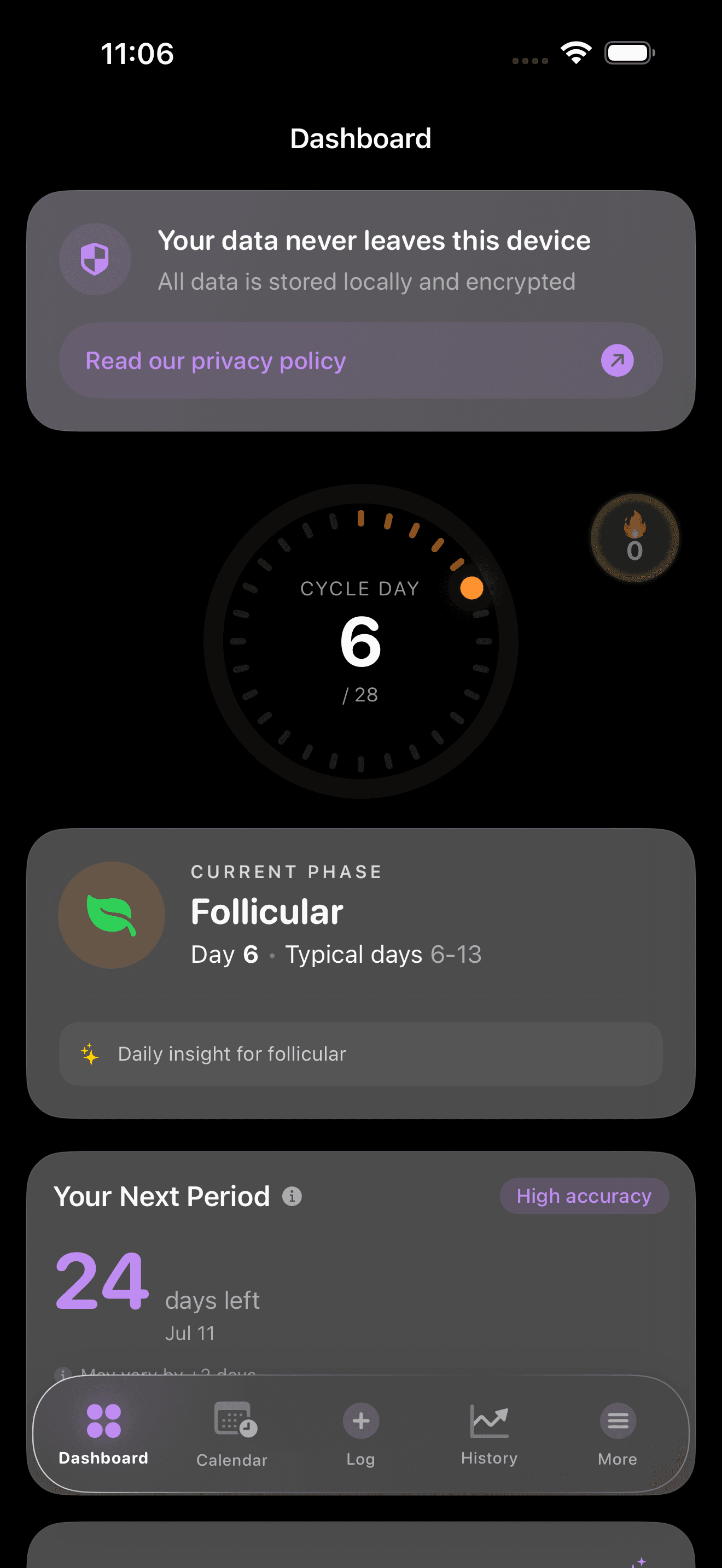
A walkthrough of Bloom Private by area: daily tracking, fertility, birth control, doctor reports, privacy and accessibility, with what is free and what is Premium.
Most period trackers ask for an email, but cycle tracking works without one. What accounts are really for, what they expose and how a no-account tracker works.
A step-by-step guide to Bloom Private: logging your period and symptoms, fertility signs, the pill blister, doctor reports, backups and privacy settings.
Irregular periods have many possible causes. Learn the most common ones, what a doctor may ask or check, and how tracking helps you prepare for the appointment.
Using an offline period tracker: what works without internet, how to back up your data, using several devices and what happens if you lose your phone.
Cervical mucus, LH tests, basal body temperature and more: the signs that suggest ovulation, how reliable each one is and when to see a healthcare professional.
Emergency contraception can make your next period earlier, later or different. What is normal, when to take a pregnancy test and when to see a professional.
The questions healthcare professionals often ask about periods, from cycle length to pain and flow, and how a few notes can make your appointment more useful.
Where your cycle data is stored, what happens when you export it or turn on Apple Health, how backups work and how to delete everything in Bloom Private.
How to tell ovulation has returned after stopping the pill or other hormonal contraception, how long it can take and when to talk to a healthcare professional.
Why headaches and migraines often come just before or during your period, how to spot the pattern over a few cycles and which symptoms need medical help.
What your beta hCG number means, how doubling time is calculated, typical ranges by week and why the trend matters more than a single result.
How to work out your due date after IVF: the formula for day 3, day 5 and day 6 transfers, fresh vs frozen embryos, twins and what happens after the first scan.
How many months is 20, 25 or 40 weeks pregnant? A clear weeks-to-months chart, the simple formula behind it and how trimesters and term are defined.
Why ads and third-party SDKs in a period app matter for your privacy, how to read the App Store privacy label and what to look for in an ad-free tracker.
Why your basal body temperature rises after ovulation, how to measure it correctly, how to read a biphasic chart and what can throw your readings off.
How standard cloud storage, end-to-end encryption and local-first apps protect cycle data, common privacy myths and a checklist to choose a private tracker.
How long the luteal phase usually lasts, how to measure yours with temperature or LH tests, what a short luteal phase means and why it matters for predictions.
When your first natural period usually comes after stopping the pill, why early cycles can be irregular, common myths and when to see a healthcare professional.
The stages of cervical mucus from dry to egg white, what each one says about ovulation, how to check it and what can change it.
How to estimate your fertile window after stopping hormonal contraception, why calendar maths is less reliable at first and which body signs help.
Cycle syncing promises to match food and exercise to each phase of your cycle. Here is what research supports, what it does not, and a simpler way to use it.
PMS and PMDD both appear before your period, but PMDD is far more severe. Learn the key differences, how PMDD is diagnosed and why daily tracking matters.